My Personal Health Dashboard

by Stanford University

by Stanford University

Improving algorithm-ready wearable data in a 3,000+ participant COVID detection study

Improving algorithm-ready wearable data in a 3,000+ participant COVID detection study

Year

2020-2022

My Role

UX/UI (sole designer)

Team

Engineers (2)

Stakeholders (3)

Research coordinators (rotating)

Coordinators (rotating)

Scientists (rotating)

Industries

B2B Healthcare

Precision Medicine

AI

Overview

Overview

Improve research-grade usable wearable data for algorithm validation.

My Personal Health Dashboard is a wearable and survey data collection mobile app for research.

As the sole designer, I redesigned the dashboard and surveys to improve the data completeness under strict regulatory and budget constraints. The redesign led to a 4× increase in usable wearable data for COVID-19 prediction algorithm validation published on Nature Medicine.

Impact

4 x

Increased usable data

1

Algorithm on Nature Medicine

10,000 +

App users

30

Paid clients scaled

Impact

4 x

Increased usable data

1

Algorithm validated on Nature Medicine

10,000 +

App users

30

Paid clients scaled

77 %

AI Tutor satisfaction

Impact

4 x

Increased usable data

1

Algorithm on Nature Medicine

10,000 +

App users scaled

30

Paid clients scaled

77 %

AI Tutor satisfaction

Problem

Missing data threatens publications and grants.
Problem

BEFORE THE REDESIGN

Missing data threatens publications and grants.

Missing data threatens publications and grants.

In 2020, only 32 wearable datasets were usable in a COVID-19 prediction study with 5,000+ enrolled participants. The app limited the scientific impact despite promising early results.

Research team was spending valuable time chasing missing data instead of generating insights. Without complete datasets, publications, grants, and career progress were at risk.

In 2020, only 32 wearable datasets were usable in a COVID-19 prediction study with 5,000+ enrolled participants. The app limited the scientific impact despite promising early results.


Researchers were spending valuable time chasing missing data instead of generating insights. Without complete datasets, publications, grants, and career progress were at risk.


Meanwhile, a 2–3 person support team was stretched thin serving thousands of research participants (app users). 58% of tickets coming from users stuck in the app’s data collection flow.

Painpoints

0.61 %

Usable data

5-10 hrs/ researcher

5-10 hrs

Monitor data completeness

Monitor data completeness

58 %

Data collection support tickets

Data collection tickets

POST-DOC RESEARCH SCIENTIST

POST-DOC RESEARCH SCIENTIST

"Participants rarely use the app, even if they are pinged… When we analyzed data, we found many participants had no data."

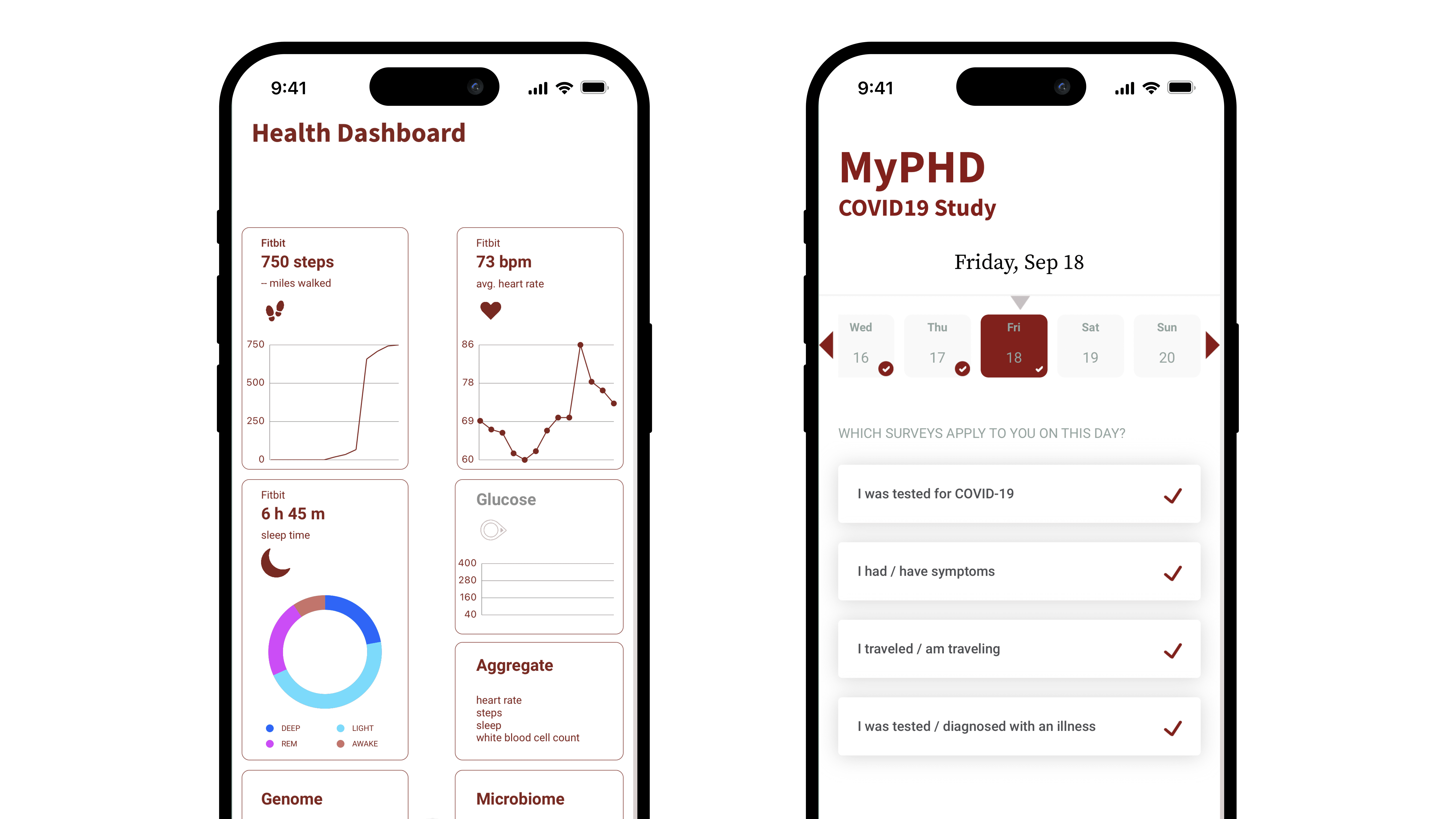
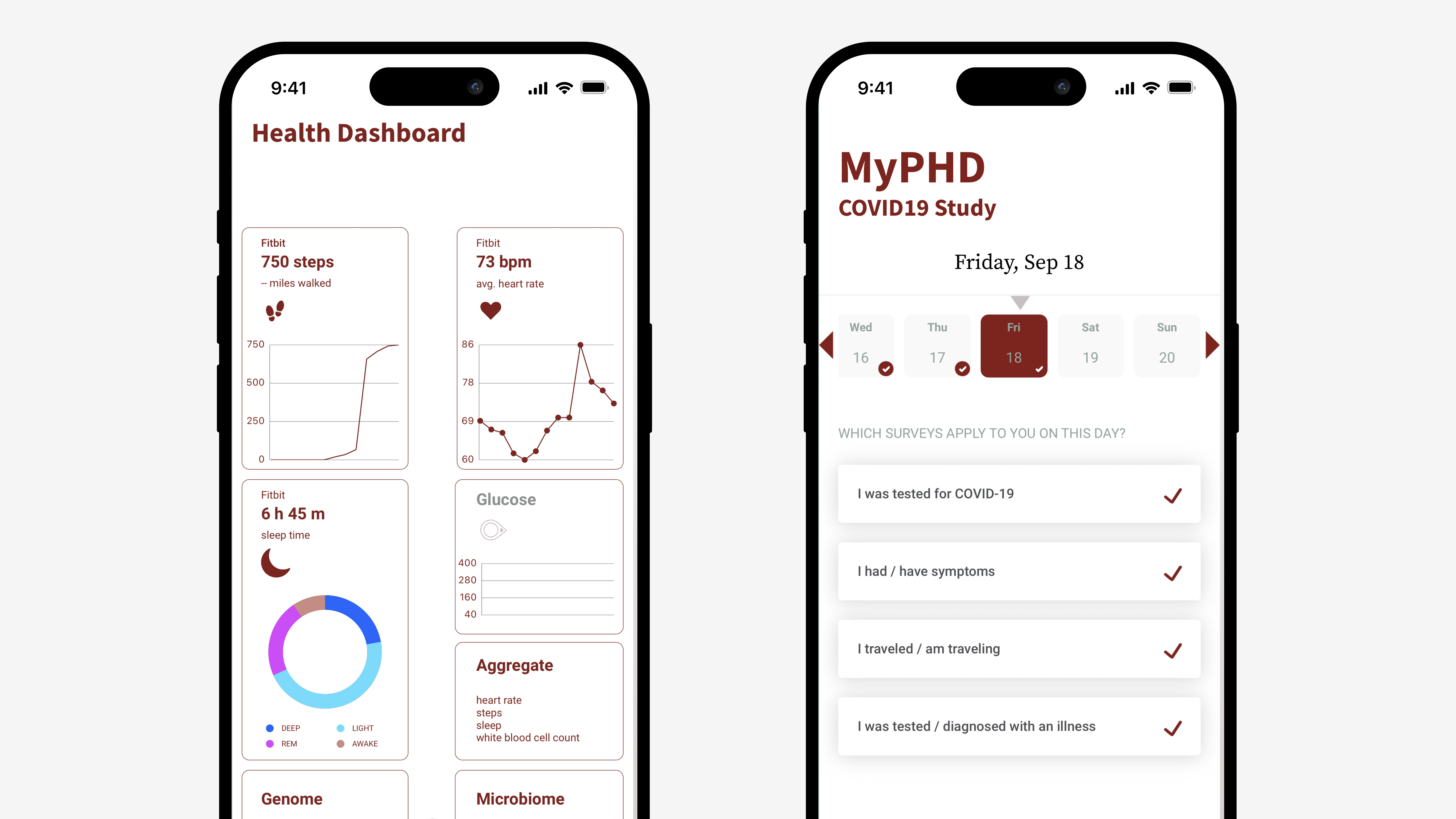
The data collection screens before the redesign: The left screen shows the Dashboard page displaying wearable data, and the right screen shows the Survey page where participants log symptoms, activities, and test results.

The data collection screens before the redesign: The left screen shows the Dashboard page displaying wearable data, and the right screen shows the Survey page where participants log symptoms, activities, and test results.

The data collection screens before the redesign: The left screen shows the Dashboard page displaying wearable data, and the right screen shows the Survey page where participants log symptoms, activities, and test results.

Clarify data sync: what, when, & how

Provide clear data sync status and action-oriented guidance to improve data completeness.

DESIGN GOAL #1

DESIGN GOAL #1: CLARIFY DATA SYNC: WHAT, WHY, & HOW

RESEARCH PARTICIPANT

RESEARCH PARTICIPANT

"On the Dashboard, there’s a bunch of other data that I don’t know how to input. For instance, it has White Blood Cell as an option. I'd love to input all of that into this study but I don’t know how."

Provide clear data sync status and action-oriented guidance to improve data completeness.

Provide clear data sync status and action-oriented guidance to improve data completeness.

59% of support tickets come from data collection confusion, many tied to the Dashboard. When the Dashboard data doesn’t match the historical data on the smartwatch’s app, participants assume syncing has failed. This lead to inactive participants.

In the redesign, I focused on clarifying connectivity status, introducing action-oriented guidance to prompt data sync, clearly differentiating the purpose of our Dashboard from the smartwatch app, and displaying only data types that are actually available through the connected device.

59% of support tickets come from data collection confusion, many tied to the Dashboard. When the Dashboard data doesn’t match the historical data on the smartwatch’s app, participants assume syncing has failed. This lead to inactive participants.


In the redesign, I focused on clarifying connectivity status, introducing action-oriented guidance to prompt data sync, clearly differentiating the purpose of our Dashboard from the smartwatch app, and displaying only data types that are actually available through the connected device.

Make the hidden criteria for usable data visible

Make data completeness criteria clear to build trust and action.

DESIGN GOAL #2

DESIGN GOAL #1: MAKE HIDDEN CRITERIA FOR USABLE DATA VISIBLE

RESEARCH PARTICIPANT

RESEARCH PARTICIPANT

"The app never seems to update... This morning I updated on WiFi, but only May 7th actually populated an algorithm alert, the 3rd and 4th are blank. I tried exiting and running the app again but still blank."

Make data completeness criteria clear to build trust and action.

Make data completeness criteria clear to build trust and action.

Among the 59% of support tickets related to the data collection flow, nearly 23% were about blank days on the calendar with no green or red COVID-19 prediction alerts. Participants assumed the app had failed syncing data, not realizing they simply hadn’t met the 12-hour wearable data threshold, especially when the Dashboard showed data without clearly explaining sync status.

I redesigned the calendar to make wearable sync, survey completion, and algorithm eligibility transparent on the same page, so participants could understand what was happening and take action, reducing confusion and increasing usable data for algorithm validation.

59% of support tickets come from data collection confusion, many tied to the Dashboard. When the Dashboard data doesn’t match the historical data on the smartwatch’s app, participants assume syncing has failed. This lead to inactive participants.


In the redesign, I focused on clarifying connectivity status, introducing action-oriented guidance to prompt data sync, clearly differentiating the purpose of our Dashboard from the smartwatch app, and displaying only data types that are actually available through the connected device.

Want to learn more about my design process? Let’s talk.

Want to learn more about my design process?

Let’s talk.