Stanford Data Ocean
A Five-Person Team Making AI-Driven Medicine Education Accessible Worldwide
Three years ago, our tiny Stanford Data Ocean team set out to make AI-driven medicine education accessible to people who rarely get the chance.
Since then, we’ve awarded more than $3M in scholarships to over 4,000 learners worldwide.
I’m the only designer on a team of two engineers and one data scientist, so roles naturally blur.
I design the platform, but I also work closely with biologists and data scientists to shape the course content and overall learning journey. In a team this small, design isn’t just about interfaces — it’s about helping build the entire experience from the inside out.
Our Health Data Holds the Insights We Need, but Most People Can’t Unlock Them. Why?
Unlocking the data insights requires knowledge across biology, data science, coding, and ethics.
This is the kind of expertise you’d normally get from a professional degree.
But the reality is, most people still can’t afford that training. Many schools don’t have the research and teaching infrastructures to offer it.
We learned from people who want to gain skills in this emerging field:
73 %
can’t afford to learn from qualified experts after paying for essentials and loans.
21 %
struggle to find comprehensive learning resources, especially those in rural or low-income communities.
6 %
are simply making ends meet, so learning new skills becomes a luxury they don’t have time for.
Making Health Data Analysis a Skill Anyone Can Learn
Stanford Data Ocean offers biomedical data analysis courses that help people make sense of health through data.
Each course includes a Stanford certification, supporting students and professionals as they build practical skills and advance in their careers.
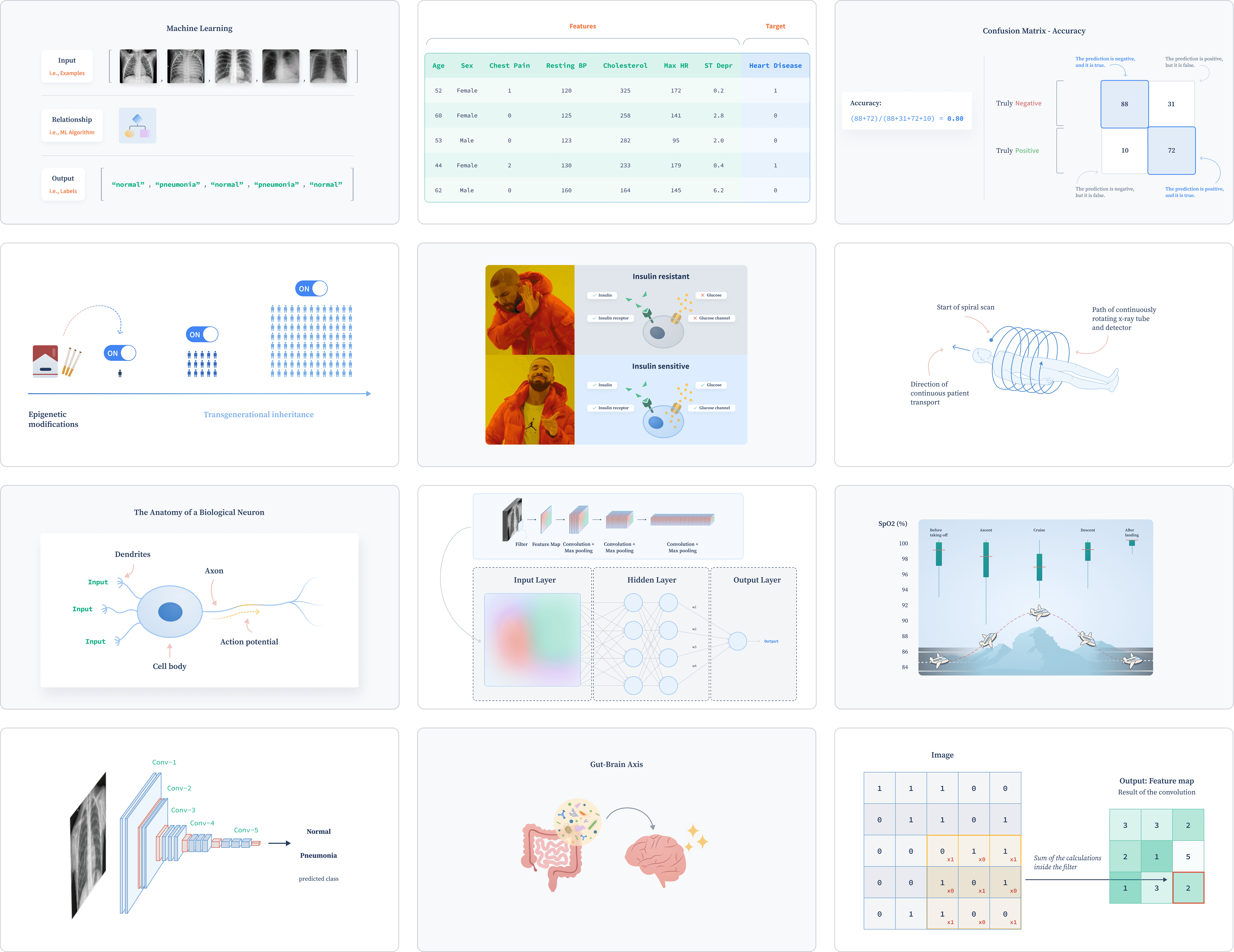
Learning module examples about analyzing health data
Cost Removed, 95% Enroll for Free
Cost is the biggest barrier to learning AI-driven medicine. So we removed it.
Anyone earning below the 2022 U.S. median income can enroll for free. No long applications. No extra hurdles.
In three years, the program has reached 4,000 learners in 93 countries.
Many of our learners are financially supporting relatives. Some are studying while paying off loans. Others are living through currency devaluation or restrictions that make international payments impossible.
The program costs $695, but 95% of our learners pay nothing.
Because they can’t, and because they shouldn’t have to.
95%
learners are getting the training courses for free.
$3 million
worth of scholarship is awarded to low-income learners.
45 %
program completion rate in 2025, increased from 15% in 2023.
Cohort Learning Makes Higher Completion Rate
We launched our first certification program as fully self-paced. Learners could study anytime, anywhere.
But life got in the way: work, caregiving, illness, power outages, even lost laptops. Progress slowed. Momentum faded. Program completion rate was at 15%.
So we changed course.
We moved to cohort-based learning. Shared goals. Gentle accountability. A sense of community.
Now, 45% of learners finish within eight weeks, completing 14–21 modules and passing the exam with scores above 80%.
Real-World Learning, 30 Minutes at a Time
We want learners to leave with skills they can actually use, so each lesson is built around real public health datasets, drawn from published research and used as case studies and exercises.
Learners work directly in a Jupyter Notebook environment, so the tasks feel practical, not theoretical.
It helps them move from “I understand the concept” to “I can apply it on my own.”
Examples of interactive lessons on Jupyter Notebook
Because study time is a luxury for many of our learners, we refined most lessons to take about 30 minutes.
That way, they can make progress in the small pockets of time they do have, such as after dinner, during a break at work, or whenever life briefly slows down.
AI Tutor Makes Sure No One Falls Behind
Soon after we launched our first course, I set up a simple analytics system to track learner progress and paired it with the demographic surveys I had designed. Very quickly, a pattern emerged. Many learners didn’t come from technical backgrounds. They were genuinely trying, but new terminology, unfamiliar concepts, and coding exercises made the work difficult and slowed them down.
We added weekly office hours to help. But with our small budget, we could only offer one hour a week. And with learners spread across time zones, many still couldn’t join.
So in June 2023, I built an AI Tutor powered by GPT-4.
It provides a way for learners to ask questions anytime, get unstuck, and keep moving forward.
Ask a question to the AI Tutor
We analyzed people's chat logs, and found out people are using it to unpack complex concepts, get unstuck on code, and keep moving forward.